Thursday, June 2, 2011

Teen Sells Kidney for IPad 2

17-year-old student in China reportedly sold his kidney to black market organ dealers and used the proceeds to buy Apple products, suggesting that the company's marketing in the country is enormously effective.

Top News

Qualcomm Introduces Triple Gigabit Chip

TDK Shows Off See-Through Screen

Google: We "Screwed Up" on Social Networking

You Can Never Have Too Many Friends, Unless It's Over 150

HP Considers Licensing WebOS, Tries to Gain Ground

More News >
"I wanted to buy an iPad 2 but could not afford it," said the boy, known as Zheng, to the Shanghai Daily. "A broker contacted me on the Internet and said he could help me sell one kidney for 20,000 yuan."
Zheng reportedly eventually received 22,000 yuan, or about $3,400.
The boy's mother became suspicious when he came home with "a new laptop and Apple handset," according to Shenzhen TV. The discrepancy between "handset" and "iPad" is unexplained.
The surgery reportedly took place on April 28, which would have given Zheng a few days to recover before braving the long and occasionally violent lines of Apple fans waiting to buy the new tablet on May 6, when it launched in China.
One hopes he didn't buy a gray market version imported from the U.S. -- people reportedly paid about double the U.S. price for early access to the tablet before it was officially available in the country.
Apple's iPad 2 has been hard enough to obtain in the U.S., even for people who didn't need to sell an organ to pay for it. Wait times have stretched into weeks for online orders, and retailers have reportedly had trouble keeping the tablets in stock.
But Apple products appear to have a special cachet for the Chinese. In April, Chinese villagers in Malaysia reportedly scoured stores selling paper versions of the iPad 2 for burning in a traditional funerary rite. Those who missed out had to settle for paper first-gen iPads or Samsung Galaxy Tabs instead.
For the top stories in mobile, follow us on Facebook or Twitter.

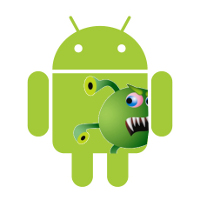
Android pulls two dozen virus-infected apps from the Market, over 30,000 users affected

owls Android becoming a virus haven? More and more malware-infected applications appear on the Market raising this question once again after Google removed 58 apps containing viruses in March. Just over the last weekend the company pulled an additional two dozen of them in an attempt to clear its application storefront. Mobile security company Lookout estimates the number of affected users between 30,000 and 120,000. 

"This weekend, multiple applications available in the official Android Market were found to contain malware that can compromise a significant amount of personal data. Likely created by the same developers who brought DroidDream to market back in March, more than 25 applications were found to be infected with a stripped down version of DroidDream we're calling 'Droid Dream Light' (DDLight)," the company commented.

A developer tipped Lookout to put them in the know about modified versions of his applications being distributed on the Android Market. 

The list of virus-infected applications as presented by Lookout follows below:   
  
Developer: Magic Photo Studio

  1. Sexy Girls: Hot Japanese
  2. Sexy Legs
  3. HOT Girls 4
  4. Beauty Breasts
  5. Sex Sound
  6. Sex Sound: Japanese
  7. HOT Girls 1
  8. HOT Girls 2
  9. HOT Girls 3

Developer: Mango Studio


  1. Floating Image Free
  2. System Monitor
  3. Super StopWatch and Timer
  4. System Info Manager
Developer: BeeGoo

  1. Quick Photo Grid
  2. Delete Contacts
  3. Quick Uninstaller
  4. Contact Master
  5. Brightness Settings
  6. Volume Manager
  7. Super Photo Enhance
  8. Super Color Flashlight
  9. Paint Master

Developer: DroidPlus

  1. Quick Cleaner
  2. Super App Manager
  3. Quick SMS Backup
Developer: E.T. Team
  1. Call End Vibrate

Developer: GluMobi


  1. Tetris
  2. Bubble Buster Free
  3. Quick History Eraser
  4. Super Compass and Leveler
  5. Go FallDown !
  6. Solitaire Free
  7. Scientific Calculator
  8. TenDrip
Android pulls two dozen virus-infected apps from the Market, over 30,000 users affected
Recently McAfee reported that Android has become the second-largest platform for malware attacks after Symbian
The security company says that the listed applicationdon’t require a manual launch for the virus to become active as it’s invoked on every phone action like a regular voice call. "The broadcast receiver immediately launches the .lightdd.CoreService which contacts remote servers and supplies the IMEI, IMSI, Model, SDK Version and information about installed packages,” the company detailed the security risks. "It appears that the DDLight is also capable of downloading and prompting installation of new packages, though unlike its predecessors it is not capable of doing so without user intervention."

It’s hard to protect yourself from malware on a mobile platform partly because virus-protection is not as wide-spread as on a regular PC, but there are a couple of steps which could help. Downloading apps from trusted sources, checking permissions required by the app, monitoring your phone for abnormal behavior and finally getting an app that would check your downloads for security are some of them

Wednesday, June 1, 2011

Cell Phones May Cause Cancer, WHO Says

Cell phones may cause cancer, according to the World Health Organization, increasing concerns and deepening the debate about how exactly mobile devices affect human health.

Top News

Droid Dream Malware Rides Again in Android Market

Sprint Lodges Formal Complaint With FCC Against AT&T Deal

Google, Apple Renew Map Partnership

Apple Aims to Stream Movies From ICloud

Patients' Phones Sicker Than They Are

More News >
At the International Agency for Research on Cancer, or IARC, in Lyon, France, 31 scientists from 14 countries urged the WHO to reexamine its guidelines for safe mobile phone use. Cell phone use is "possibly carcinogenic," the scientists say, meaning it could increase the risk for certain types of brain cancer.
In the past, the WHO has maintained that phones are safe, but this latest study calls that assertion into question, saying the agency's own research is contradicting it. WHO scientists are now linking brain tumors and cell phones' electromagnetic radiation, a finding corroborated by earlier studies, though none of them is conclusive.
"It's not at the moment clearly established that the use of mobile phones does in fact cause cancer," said Kurt Straif, head of the IARC Monographs Program, though he advises precautionary measures just in case. "For example, the highest exposure is from voice calls. If you use text messaging or headsets, this will lower the exposure."
Scientists are not completely sure whether electromagnetic waves are responsible for brain cancer, since a number of factors can contribute to this disease. Genetic makeup, amount of exposure, and other environmental factors can all affect a person's chances of getting a tumor.
Also, the WHO study examined current cancer patients who used cell phones over a decade ago and found this sampling is not optimal since mobile devices have evolved drastically and rapidly since 2001. World cell phone use hit 5 billion last year, meaning three quarters of people have a mobile -- the cancer rate among such a large population is bound to be higher than that in a small sample.
But other studies seem to suggest a link, however tenuous, between phones and cancer. The Environmental Health Trust found that "brief, mild electromagnetic signals" fragmented DNA in insect cells, in addition to affecting the blood-brain barrier in young male rats.
The FCC currently requires that phones emit no more than 1.6 watts per kilogram of electromagnetic energy and be kept away by at least 1 to 2 millimeters from a person's body. Still this information is often buried in the fine print of cell phones' owners' manuals so that many consumers remain unaware of these specifications.
Lawmakers in San Francisco recently tabled an initiative that would have made cell phone carriers label their devices outright as "radioactive," a move that understandably did not go over well with wireless giants AT&T and Verizon.
But whether or not cell phones significantly damage human health, scientists also classify coffee, night shift work and gasoline engine exhaust as potentially carcinogenic.
"Anything is a possible carcinogen," said Donald Berry, biostatistics professor at the University of Texas. "This is not something I worry about and it will not in any way change how I use my cell phone."
For the top stories in mobile, follow us on Facebook or Twitter.

Apple Aims to Stream Movies From ICloud

Apple may add movies to its new cloud-streaming service, joining the fray of an already crowded video streaming turf-war.

Top News

Droid Dream Malware Rides Again in Android Market

Cell Phones May Cause Cancer, WHO Says

Sprint Lodges Formal Complaint With FCC Against AT&T Deal

Google, Apple Renew Map Partnership

Patients' Phones Sicker Than They Are

More News >
Apple is in talks with movie companies, including Warner Bros. and 20th Century Fox, according to CNET, to allow Apple to stream movies its customers own through Apple's iCloud streaming service, which will be unveiled next week at the company's Worldwide Developers Conference.
Streaming movies would work the same way as streaming music. With a user's permission, the iCloud would search through an iTunes library for previously owned movies, and then enable those movies to stream wirelessly. For example, a customer who owns "The King's Speech" on their desktop or laptop computer would get the store's permission before being able to stream that movie from the cloud on any device.
For that to happen, though, Apple must reach an agreement with the film's studio.
Apple has many hurdles to jump before arriving at a deal between Warner Bros. Pictures, 20th Century Fox and NBC Universal and HBO. For one thing, HBO currently prevents any digital distributor or cable network from showing a movie that is currently being shown on the paid cable network.
Many companies, including Time Warner, the parent company of both HBO and Warner Bros., feel there is a difference between selling a movie that's on HBO and allowing a person to stream a movie they already own. Time Warner CEO Jeff Bewkes, who has stated he is a fan of cloud media, is currently working on coming to an agreement between both parties.
If Apple is successful in landing movie companies, they may emerge as major competition to the industry leader, Netflix. The Los Gatos, Calif.-based company has seen its figures skyrocket in the last year, thanks to the introduction of its streaming-only plan which gives customers the option of forgoing movies by mail in favor of only having access to digital movies.
The company added nearly seven million subscribers over the past year, and currently accounts for nearly 25 percent of all Internet traffic.
Along with Netflix, other sites like Hulu and YouTube have also entered into streaming and renting of movies. Like Netflix, Hulu offers both free and paid services, with the paid service offering more content of both movies and television shows. YouTube does not have a monthly fee, but rather charges by the rental.
Social network giant Facebook has also begun renting movies on its site as well, rounding out an early list of players in which will likely become a booming market.
For the top stories in mobile, follow us on Facebook or Twitter.

Huawei Ascend X is a 4G/HSPA+ enabled Android smartphone for Cincinnati Bell

Cincinnati Bell wants a piece of the ever-growing Android pie. The carrier launched a new high-end smartphone, Huawei Ascend X, offering 4G (HSPA+) speeds for just $99.99. Of course a two-year service agreement is required, but that comes as given these days.
Specs wise, Huawei’s baby rocks a decent 4.1-inch touchscreen, 1GHz Snapdragon processor, 5-megapixel camera with 720p HD video recording capability, 512MB or RAM coupled with 2GB of ROM, and 2GB of built-in storage which is further expandable with microSD memory cards.
All in all, it’s quite a decent phone that comes as refreshment to Cincinnati Bell’s well not that awesome portfolio. Hopefully, the carrier will also add few tablets in its offering to be able to compete with the big guys of the industry.
If you’re a) living in Cincinnati Bell’s coverage area; b) want a great Android smartphone – proceed to this page to check out the Huawei Ascend X.

What is the perfect smartphone display size for you? (poll results)

Some say that bigger is better, but this may not be the case when it comes to a smartphone's display size. It is true that modern smartphones come in all shapes and sizes, some of them even going beyond the 4.3-inch milestone, yet somehow, such extremes are starting to look and feel a little too spacious for users to work comfortably with. That is why we were curious to know what the perfect display size for you was, and the votes from our poll are already in.

The results indicate that the majority of you, or 40.55% to be exact, find screens between 4.0 and 4.29 inches to be perfect for them. Anything in between 3.5 and 3.99 inches is what 31.5% of our readers prefer, and 24.86% of you are fans of displays measuring 4.3 inches and above. We were quite surprised to see that only 3.09% of you will fancy a smartphone with a screen size below 3.5 inches, which is not good news for the petite HP Veer 4G.


Poll

What is the perfect smartphone display size for you?
3.09% 123 votes (123 votes) Less than 3.5 inches – The smaller, the better. Navigation is easy and the smartphone fits nicely in the smallest of pockets.
31.5% 1252 votes (1252 votes) Between 3.5 inches and 3.99 inches – Small enough to use with ease, yet big enough to read fine text.
40.55% 1612 votes (1612 votes) Between 4.0 inches and 4.29 inches – The extra real estate proves useful when viewing photos and videos.
24.86% 988 votes (988 votes) 4.3 inches and above – No display is too big for my hands.
3975 votes

Apple confirms iOS 5, iCloud, to be unveiled June 6th

Apple’s WWDC event on June 6th is one of the most anticipated events this year, but what will it bring? Cupertino has just released a statement confirming some major announcements to be made at the conference including the unveiling of iOS 5.0, the next major update to Apple’s mobile operating system, andiCloud, a cloud-based music service. 

“At the keynote, Apple will unveil its next generation software - Lion, the eighth major release of Mac OS® X; iOS 5, the next version of Apple’s advanced mobile operating system which powers the iPad®, iPhone® and iPod touch®; and iCloud®, Apple’s upcoming cloud services offering.” 

That’s the first official confirmation of the rumored about cloud music service, while the news about iOS update had already appeared in invites for the event. But as exciting as it all sounds, there is still one thing sorely missing from the statement and that’s the iPhone 5. It seems that all rumors about a later release date of the handset, probably in September, are about to come true and WWDC will be much more of a software-centric event this year. 

In addition, the preliminary announcement of the cloud-based service and iOS 5 raise a lot of questions as Apple's strategy is to usually hold down announcements until the very event. But you never know what that iconic and most influential CEO could surprise us with, do you? And if you've had any doubts about whether he'll be the one to present the new features, you can wipe them away.